

Located in Napa Valley, Tasting Room After Dark was designed as a private, after-hours retreat—an intentional departure from bright tasting counters and daytime pours. The concept centered on mood and masculinity: darker finishes, tailored materials, and lighting that favors glow over brightness. Rather than perform for daylight, the space was built for evening—slow conversation, aged spirits, and the kind of atmosphere that feels quietly timeless.


The space began as a rectangular office suite carved out of an older home—functional, fluorescent-lit, and entirely unremarkable. Drop ceilings, plastic carpet, and a standard layout left little architectural character to work with. There was no natural mood, no texture, and nothing inherently atmospheric about the box we inherited.
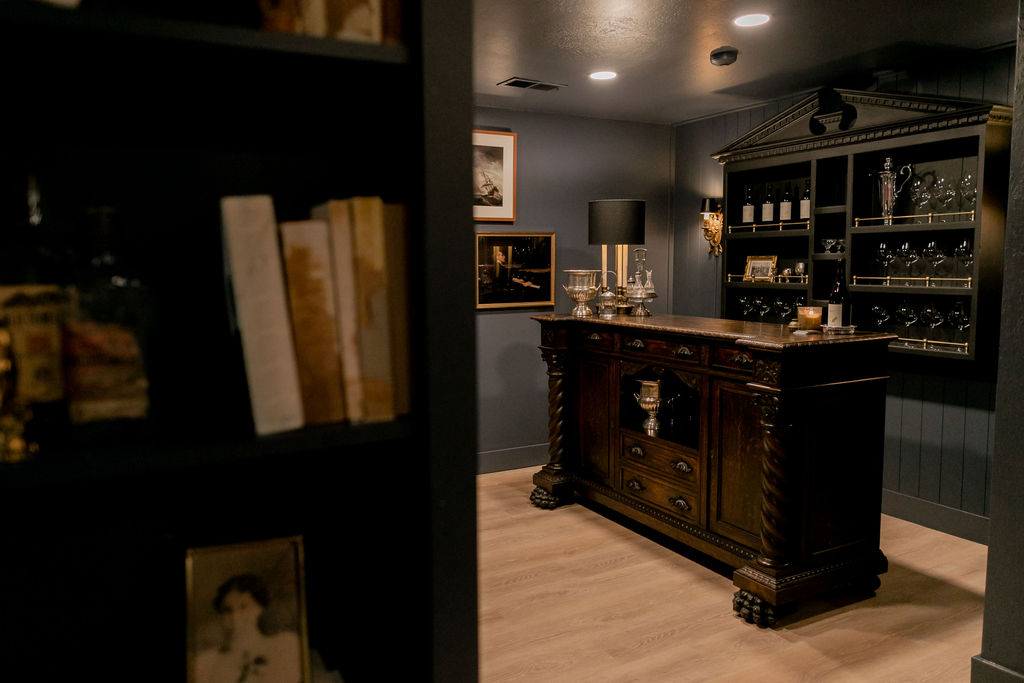
Because the intention was to create a speakeasy-style tasting room, transformation depended heavily on controlling light. All exterior windows were fully covered to eliminate daylight and establish a consistent, evening-driven environment. Like any proper after-hours room, it also required a concealed entry, so a custom bookcase door was installed to create a discreet transition from office to retreat.
The renovation required structural adjustments as well. Since the space would operate as a wine tasting room, ADA compliance was essential, including a fully reworked bathroom that required thoughtful spatial planning. Fluorescent lighting was removed entirely, worn carpet was replaced with new wood flooring, and the foundation was set for layered paint, low lighting, and depth. The original shell offered little character—but it provided the blank canvas necessary to build atmosphere from the ground up.

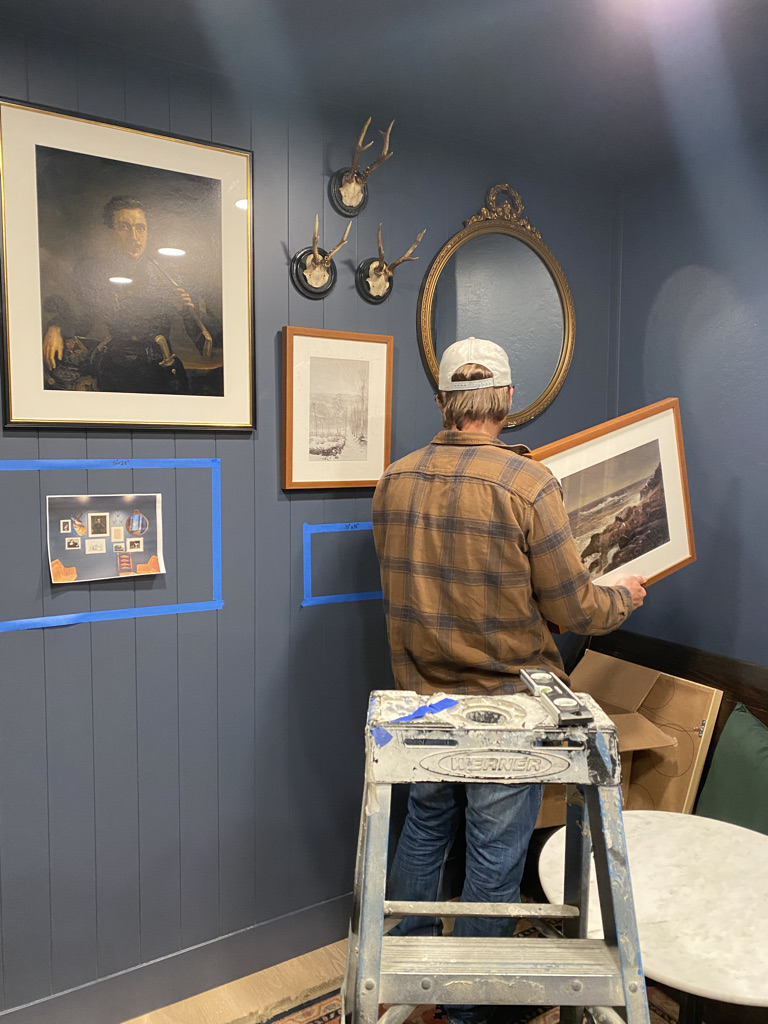
The design direction leaned into atmosphere rather than decoration. Instead of referencing a speakeasy through obvious motifs, the space was layered with objects and materials that carried their own history. Antique portraits of formally dressed men, maritime paintings, collected pipes, aged poker chips, and authentic silver drinkware were sourced to create a sense of lineage rather than theme.
Taxidermy and thick plaid drapery added texture and weight, grounding the room visually and acoustically. Every element was selected for depth—objects that felt inherited rather than purchased. The goal was not to recreate Prohibition-era nostalgia, but to evoke its intimacy: dim light, tailored detail, and a sense that the room had existed long before you arrived.
It is masculine without being theatrical, moody without being heavy, and intentional in every layer.


The palette was anchored in depth. Walls were finished in Stiffkey Blue, a near-black navy that absorbs light rather than reflecting it, allowing the room to feel enveloping and controlled. Against that backdrop, burnt brass saucer sconces cast a warm, directional glow—favoring shadow and atmosphere over brightness.
New materials were introduced sparingly and with weight. Marble cocktail tables punctuate the space with cool contrast, while thick plaid drapery from The Shade Store adds softness and acoustic depth. Wood flooring replaced the previous carpet, grounding the room in natural texture and quiet continuity.
The character of the space, however, comes from what was sourced rather than installed. Individually collected antiques—including old church pews, prohibition-era drinkware, antique portraits, reupholstered vintage sofas, and even the family’s heirloom rifle—were layered intentionally throughout. Each piece carries its own patina and narrative, reinforcing the idea that the room evolved over time rather than appearing all at once.
The result is a palette built less on color and more on tone—navy, brass, marble, wood, and age—composed to feel intimate, tailored, and quietly masculine.

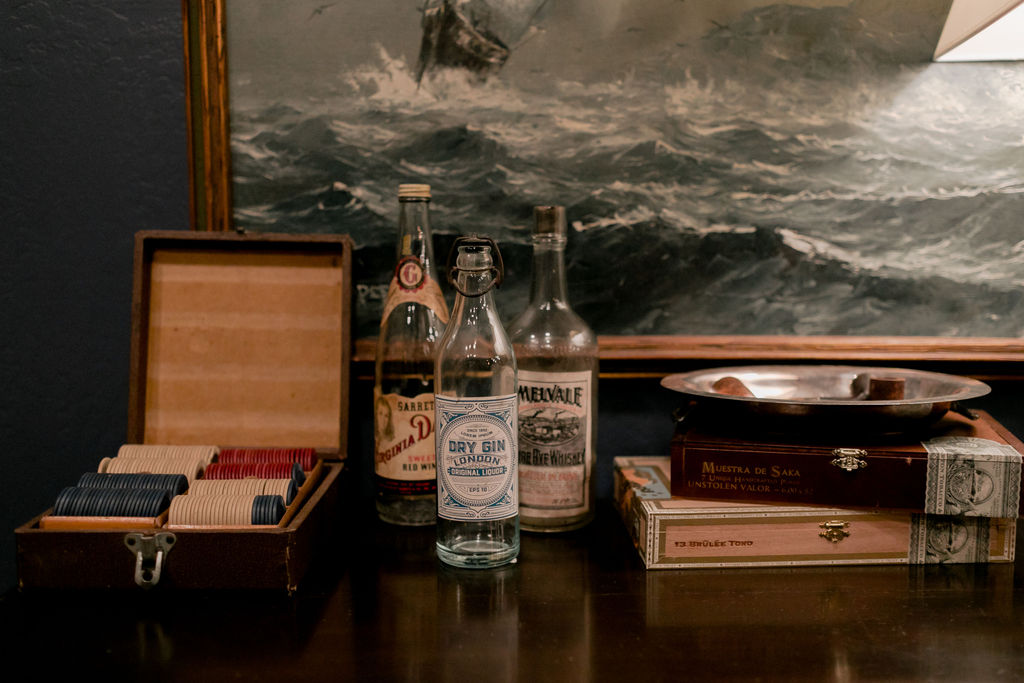
Once the lights are lowered and the door closes behind you, the room shifts entirely. The absence of daylight allows the navy walls to recede, while brass sconces cast a warm, deliberate glow across marble, wood, and aged silver. Conversation settles in. Glassware feels heavier in the hand. Time stretches slightly.
The concealed entry heightens the sense of transition—from ordinary to intimate—while the layered antiques and dark textiles absorb sound and soften the edges of the space. It is designed for late pours and long discussions. The experience is less about spectacle and more about mood: tailored, private, and quietly cinematic.

We renovate one property at a time — preserving what matters, refining what doesn’t, and designing for how spaces are actually lived.
— Deco Vaquero
Every piece was chosen with intention — layered textures, aged brass, dark paint, and 100% authenticity. Explore the full edit below.
View the Collection →