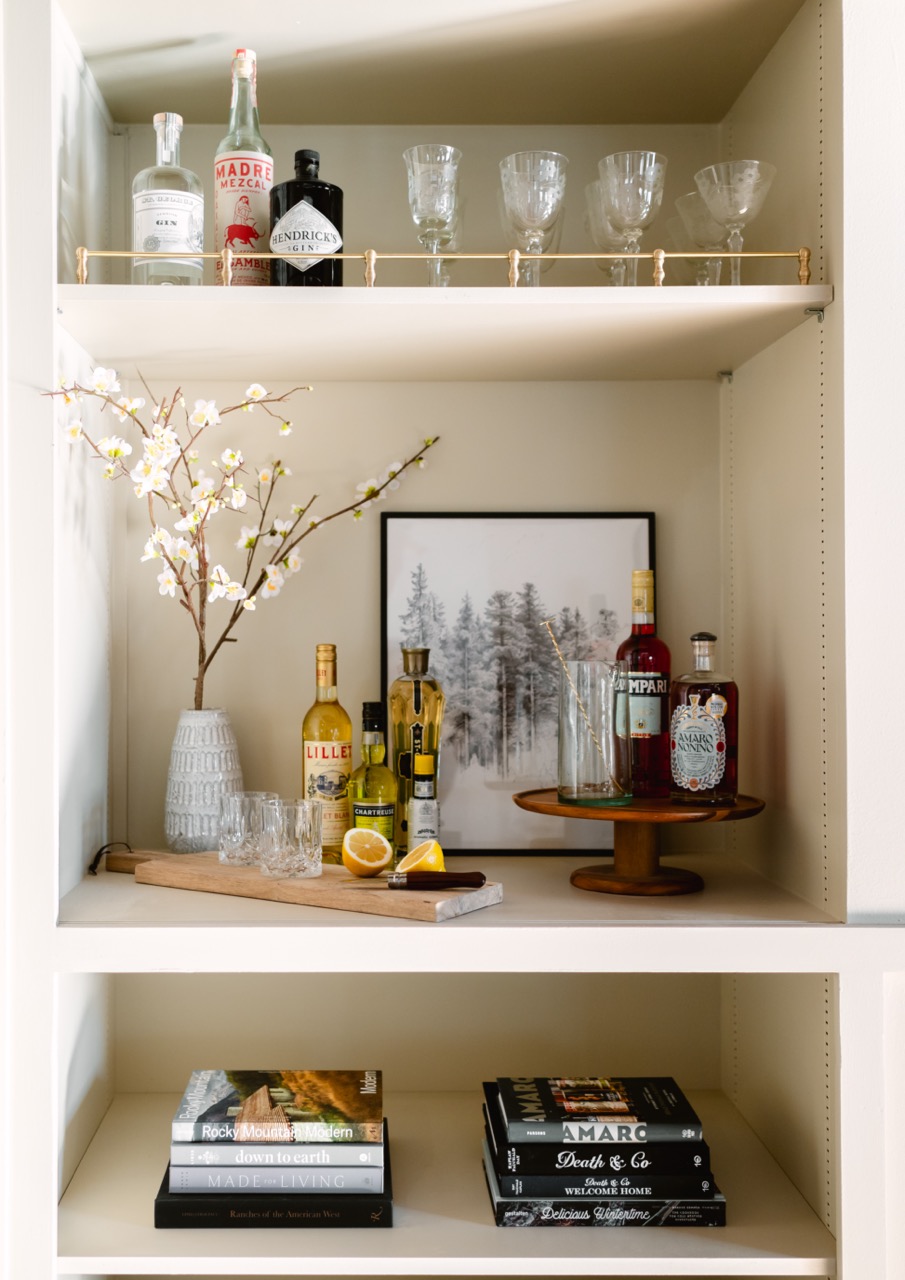
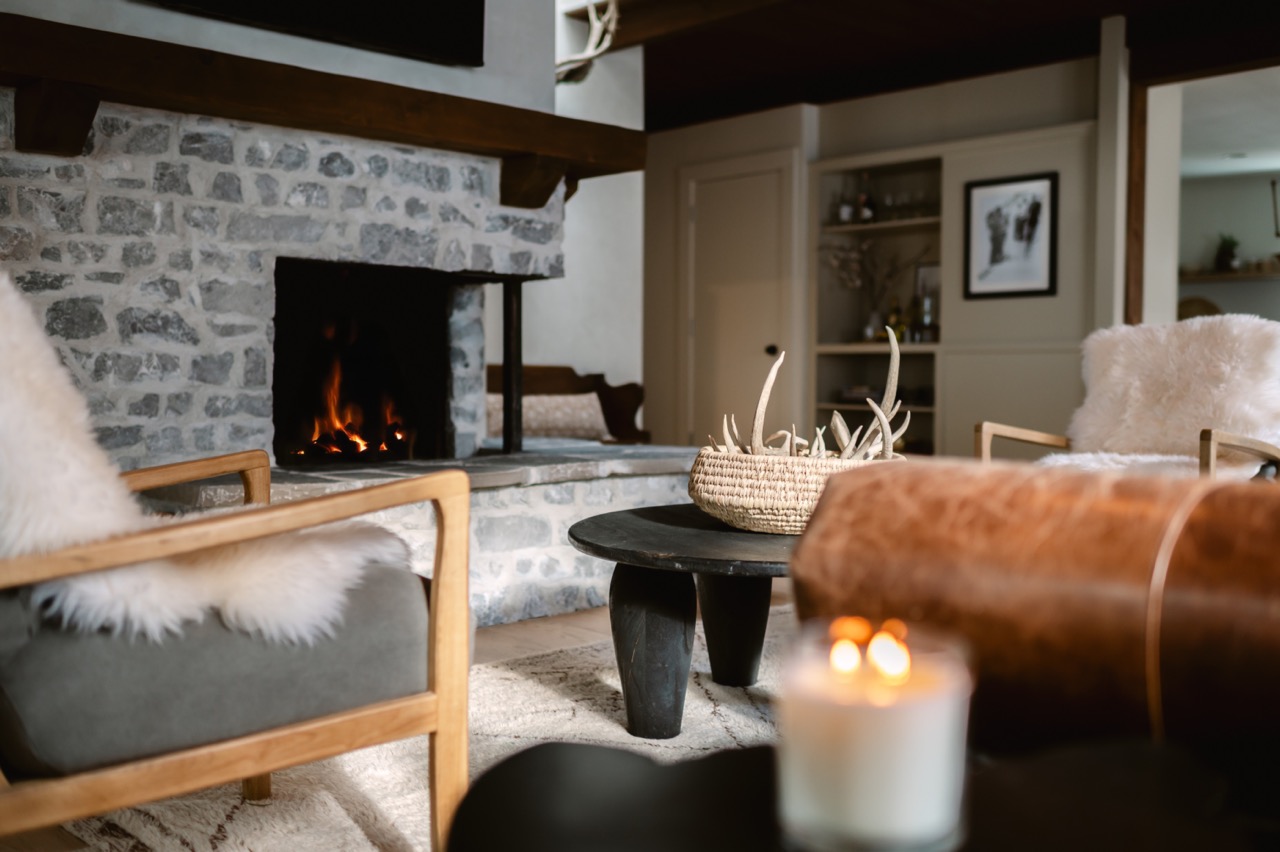
Located in the pine-covered foothills of Evergreen, Colorado, this modest Swiss-inspired cottage began as a dated but structurally honest mountain home. The Modern Swiss Cottage was not redesigned to erase its past, but to refine it — introducing warmth, material depth, and alpine clarity without losing its mountain soul.
Rather than over-modernizing the space, the goal was to refine what was already working. The renovation focused on warm wood tones, aged finishes, and alpine restraint—allowing the cottage to feel intentional without losing its mountain character.
It is alpine, modern, and quietly grounded.
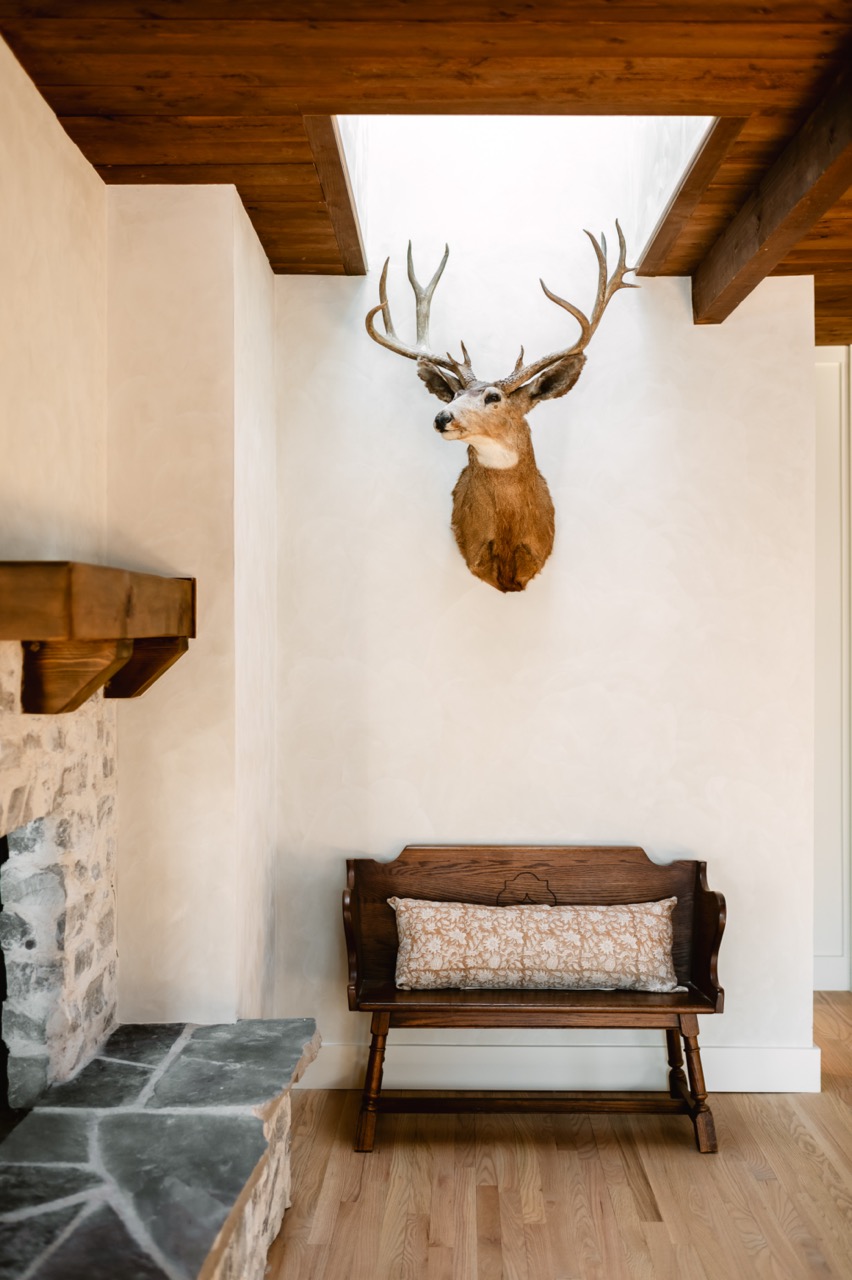
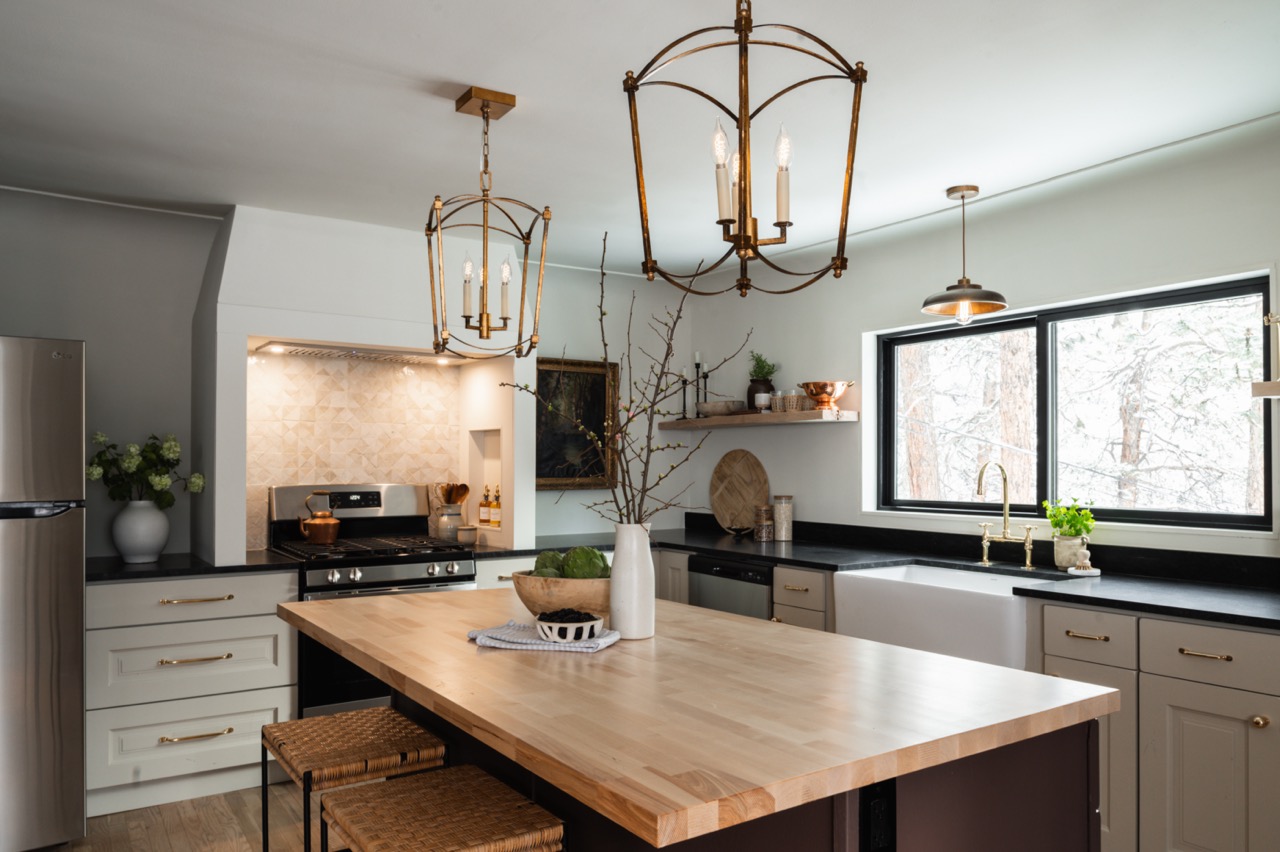
Built in the 1940s and tucked into five wooded acres in the foothills of Evergreen, the two-story cottage had solid bones and quiet charm. The structure itself was honest and well-positioned, but time had left the interiors fragmented and dated for modern living. Our goal was not to erase what made her special, but to preserve the best elements and thoughtfully improve the rest—adding a much-needed bathroom, reworking the kitchen entirely, and refining the overall flow of the home. The character was always there; it simply required careful editing and restraint to bring it forward.

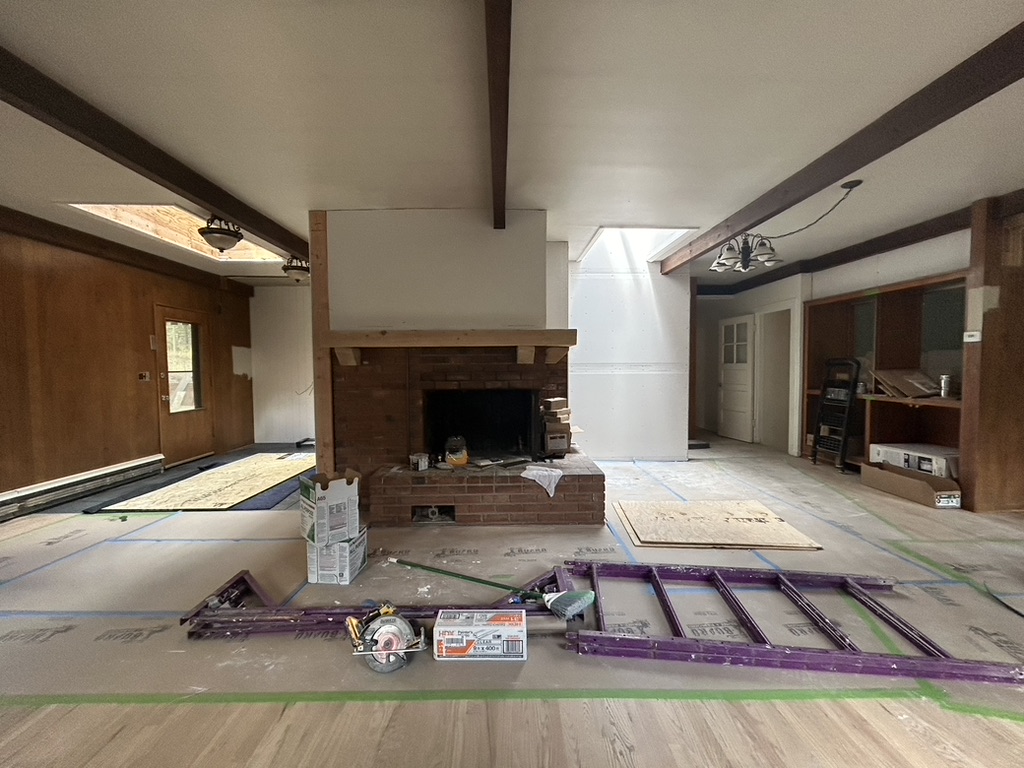
The design direction centered on alpine restraint—honoring the cottage’s Swiss influence while introducing a quieter, more modern clarity. Rather than layering trends, we focused on proportion, texture, and warmth. Natural wood tones, soft limewashed surfaces, and aged brass details were introduced to create depth without heaviness. Every decision was made to simplify the interior while amplifying its character, allowing the home to feel cohesive, grounded, and comfortably lived-in.
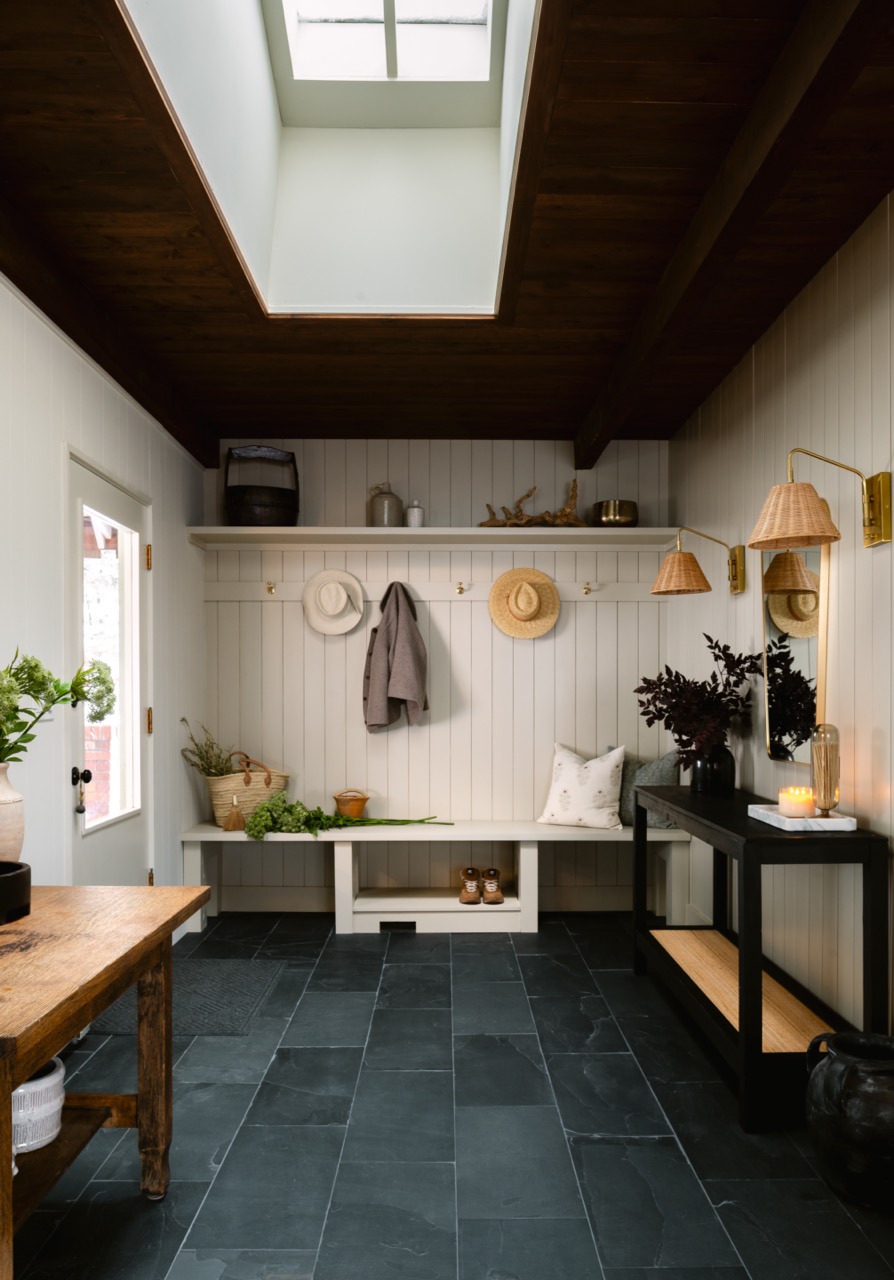
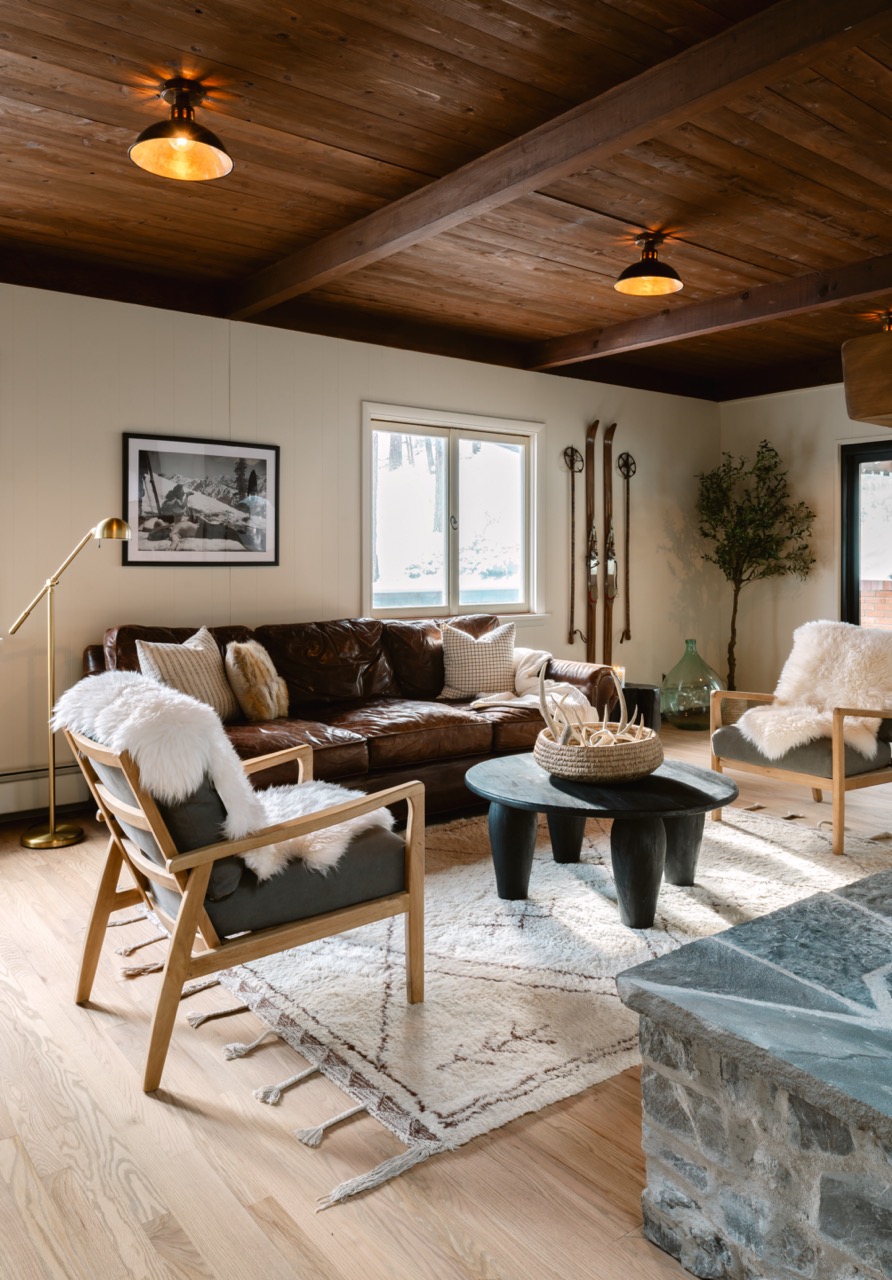
The palette was built around restraint and patina. Walls were finished in School House White by Farrow & Ball, a nuanced off-white that carries warmth without reading yellow. It allowed the dark wood tones and stone surfaces to stand forward while maintaining the alpine clarity we were after. In select areas, limewash in Dolomite introduced depth and movement—soft variation that feels lived-in rather than flat.
We leaned into contrast through dark-stained wood, black slate floor tile with natural imperfections, and leathered black granite countertops. The subtle texture of the granite and the irregularity of the slate were intentional; both materials carry weight and character, grounding the lighter walls and cabinetry. Cabinets were painted in Stony Ground, a warm, soft beige that pairs seamlessly with the surrounding wood tones and avoids the sterility of a bright white kitchen.
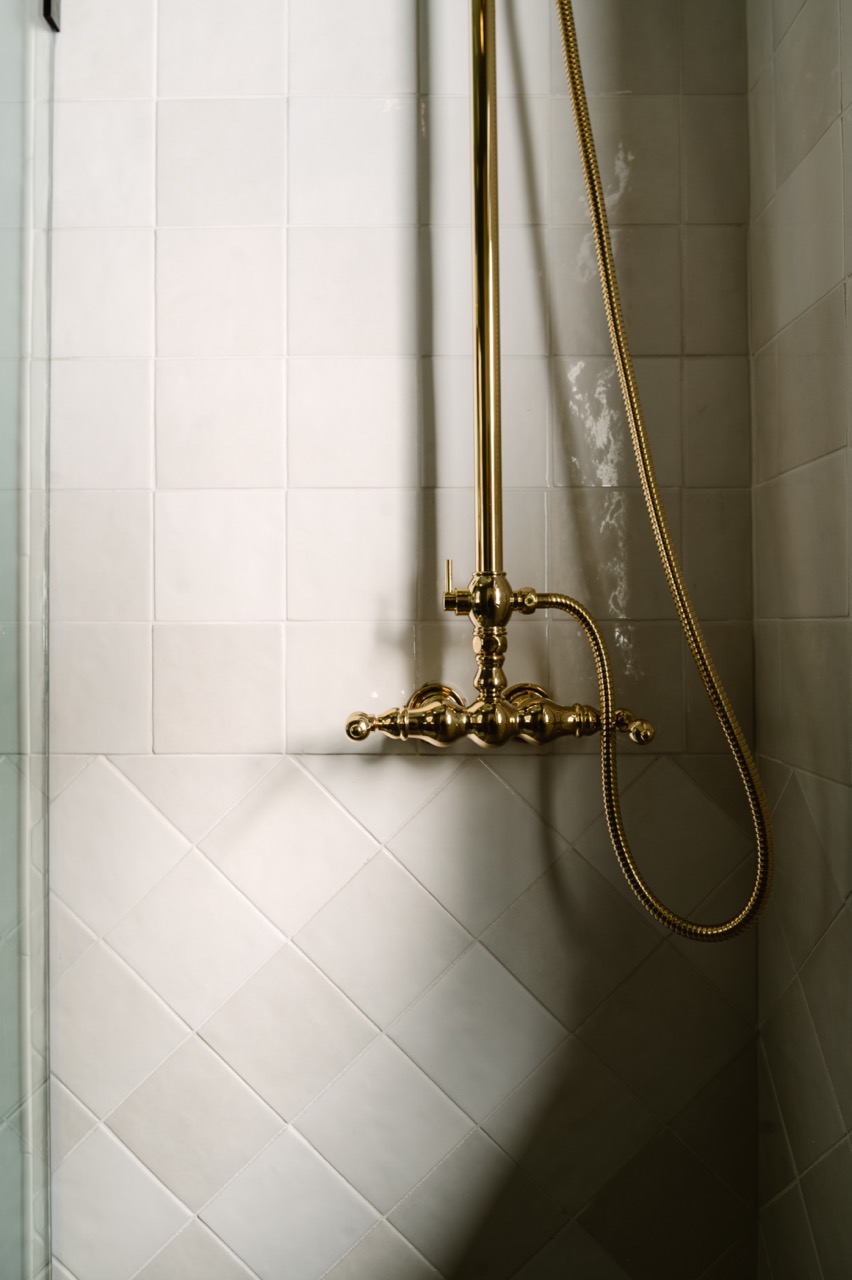
Metal finishes were equally deliberate. Antique brass light fixtures by Mullan Lighting and unlacquered brass hardware were used throughout, chosen specifically for how they age. The patina that develops over time becomes part of the story, reinforcing the idea that the home should evolve with its owners rather than remain static.
Original wood floors from the 1940s were restored rather than replaced, preserving the cottage’s foundation. In the kitchen, handmade zellige tile introduced subtle variation and irregularity—another material that feels human and imperfect by design.
For the primary bedroom we chose London Clay, creating a moody, romantic envelope that contrasts beautifully with the brighter living spaces. In the bathroom, Oval Room Blue brought a stately elegance, paired with Carrara marble hexagon tiles and Cloe porcelain wall tiles by Bedrosians for a timeless, elevated finish that feels both traditional and fresh.
The result is a layered palette of warmth, depth, and quiet contrast—materials chosen not for trend, but for how they age.
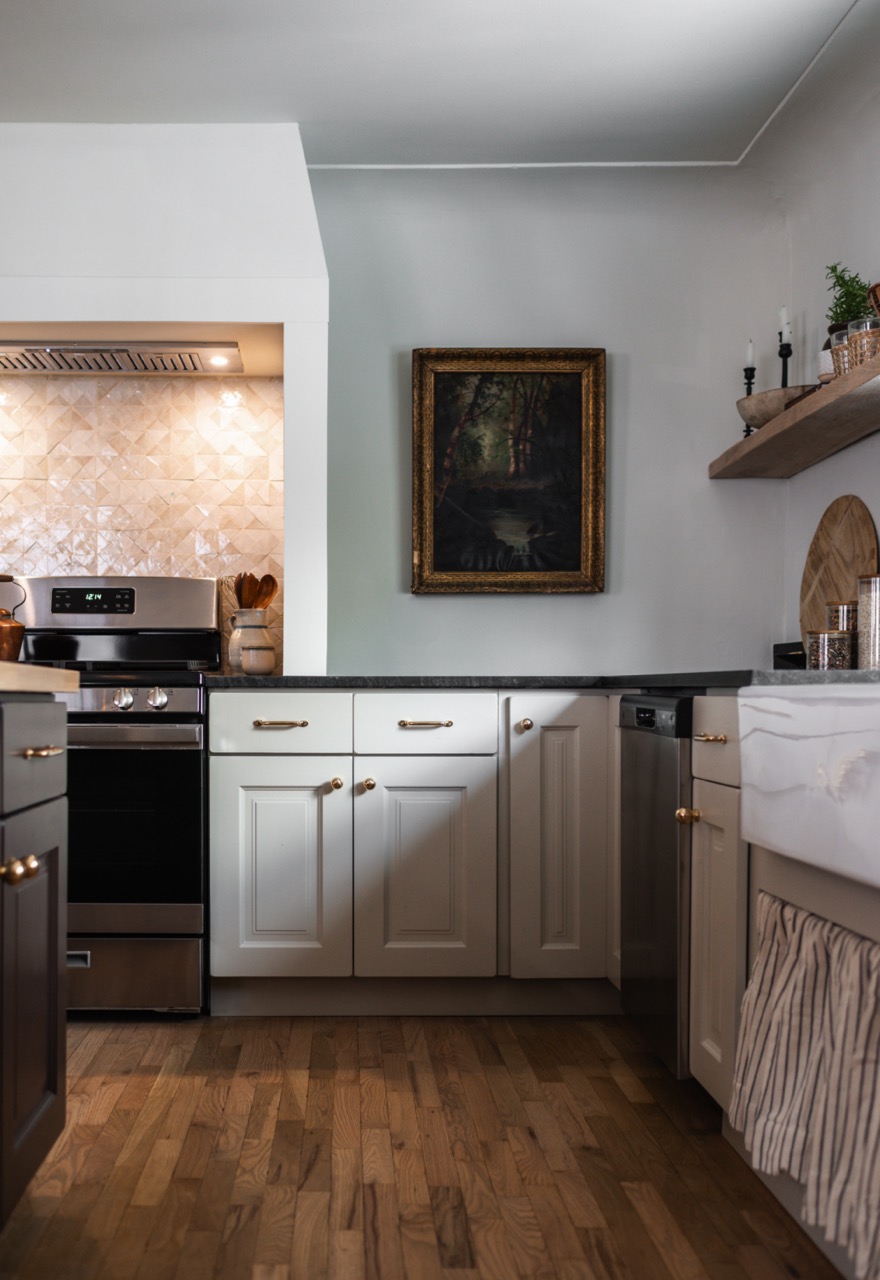

Now, the cottage moves easily from room to room. Morning light settles softly against School House White walls, the kitchen feels grounded and functional rather than decorative, and the restored wood floors carry the quiet weight of decades past. The darker tones—London Clay in the bedroom, slate underfoot, aged brass catching light—create intimacy without heaviness. It is a home that feels settled into its landscape, tucked into the woods, designed for long dinners, quiet winters, and the kind of daily life that unfolds slowly rather than on display.

We renovate one property at a time — preserving what matters, refining what doesn’t, and designing for how mountain homes are actually lived.
— Deco Vaquero
Every piece was chosen with intention — layered textures, aged brass, dark paint, and alpine restraint. Explore the full edit below.
View the Collection →