Just steps from City Park in Uptown Denver, the Charming Heirloom Cottage sits quietly among mature trees and historic facades — a small home with a long memory. Though modest in scale, it carries the kind of architectural soul that deserves preservation rather than reinvention. Our approach was simple: honor what time had given it and layer in warmth, patina, and thoughtful restraint. The result is a space that feels collected over generations — intimate, storied, and deeply lived-in.
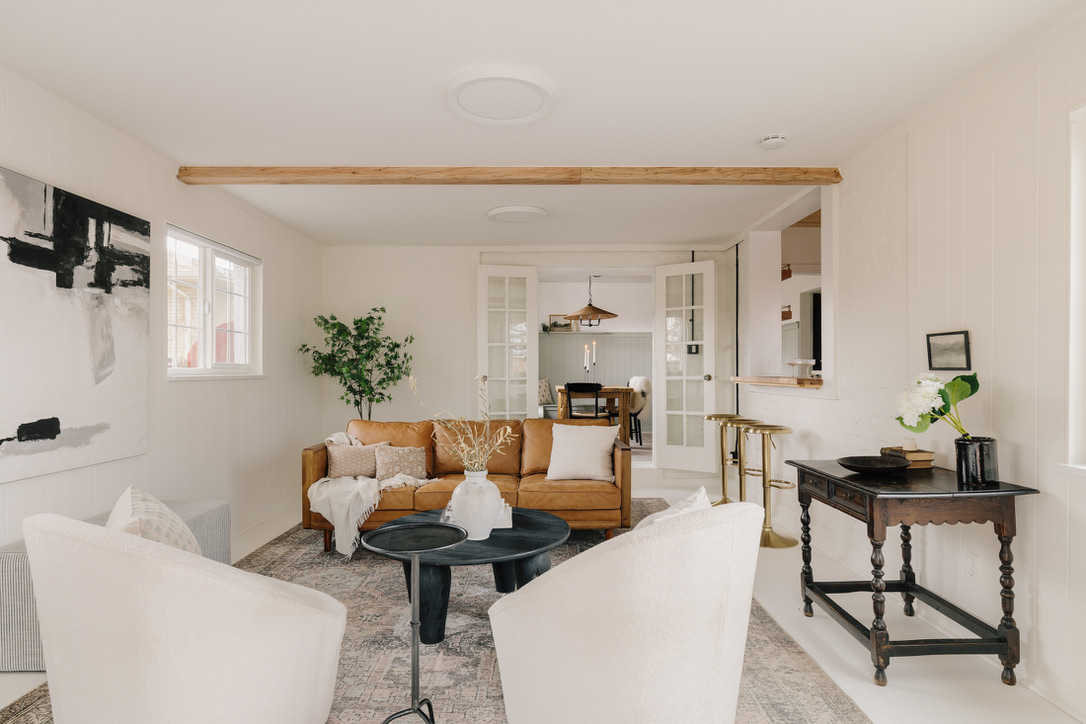

Built in the 1920s, long before the surrounding blocks filled in, this cottage carries a distinctly European sensibility — intimate in scale and thoughtfully divided into rooms rather than sprawling open space. It is the antithesis of modern open-concept living, and that is precisely its charm. Each room unfolds quietly into the next, creating moments of pause and privacy that feel increasingly rare.
Many of the original finishes remain: timeworn wood floors that speak softly underfoot, hand-troweled plaster walls with subtle movement and texture, and windows that cast the most extraordinary light throughout the day. In the back, a generous butterfly garden softens the urban setting, giving the home an almost countryside romance in the middle of Uptown.
Over the years, however, well-intentioned updates layered on unnecessary trim, fixtures, wallpaper, and partitions that distracted from the home’s quiet elegance. Our first task was not to add — but to subtract. To peel back the haphazard additions and return the cottage to its original clarity, allowing its 1920s bones and European soul to breathe again.

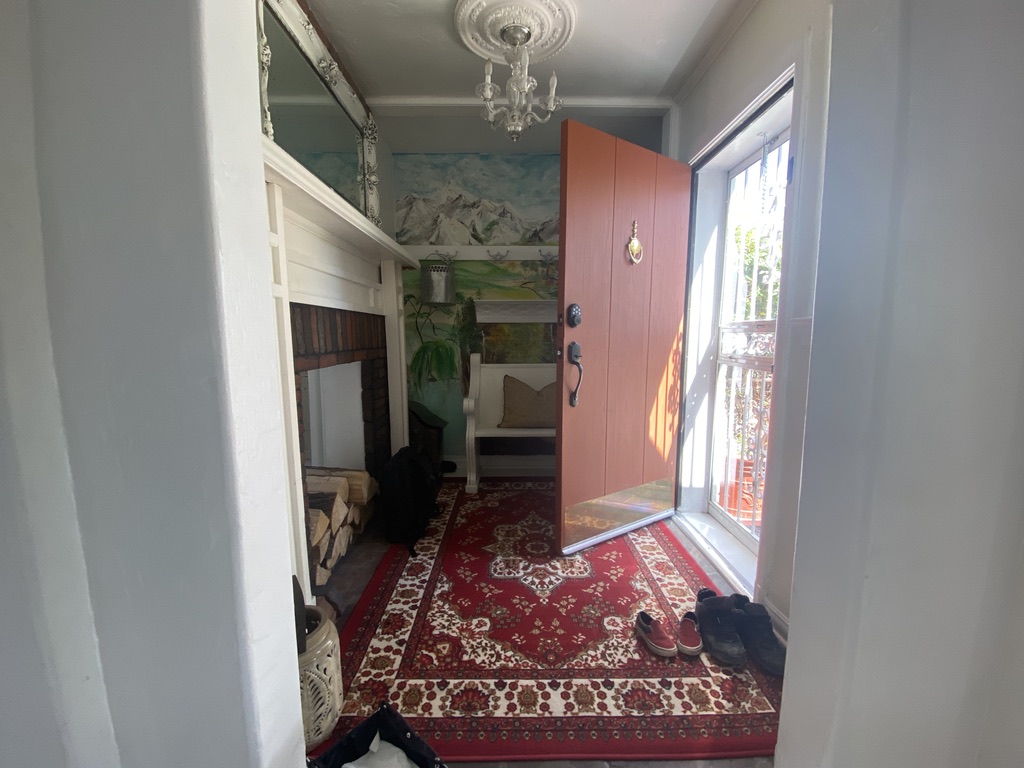
Unlike many of our mountain projects where landscape and lifestyle drive the aesthetic, this cottage allowed the architecture itself to lead. The bones were already expressive — intimate rooms, plaster walls, historic windows — and it would have felt heavy-handed to compete with them. Instead, the design direction became one of refinement and restraint.
Less Alpine. More European.
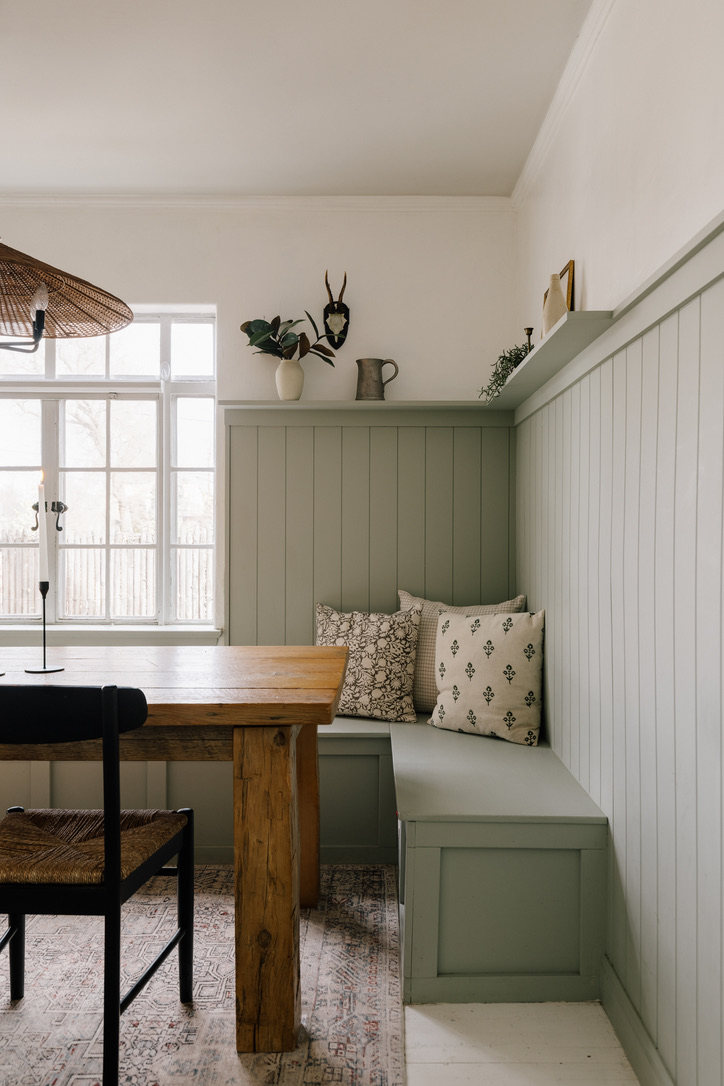
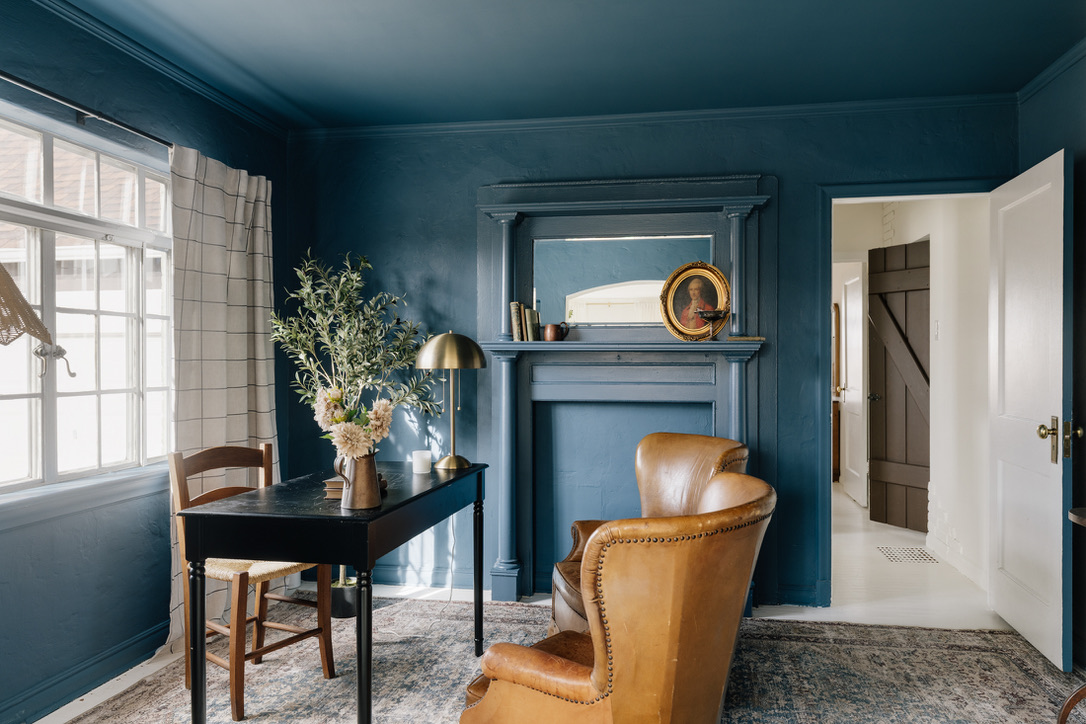
We leaned into layered greens and muted blues as a quiet reflection of the lush garden just beyond the back doors — colors that feel as though they belong to the house rather than sit on top of it. The palette softens the light, deepens the mood, and gives each room a subtle individuality while still feeling cohesive.
Most importantly, we resisted the temptation to make it feel “new.” Nothing was meant to appear recently installed or overly styled. The goal was to preserve the sense that this home has been lived in — thoughtfully, lovingly — for generations. Pieces feel collected, finishes feel honest, and the character of the house remains intact. The design doesn’t shout over the architecture; it listens to it.

The material direction was rooted in light. With sun pouring through historic windows, we preserved most of the original plaster walls in soft white, allowing the natural glow of the home to do the heavy lifting. Rather than competing with that luminosity, we used color strategically — deepening certain rooms while keeping the overall feeling airy and refined.
Throughout the home, unlacquered brass hardware was selected for its ability to age gracefully. It will darken, soften, and develop patina over time — growing with the house rather than resisting it. Every light fixture was replaced, each one chosen intentionally to shape the character of its room. Lighting became less about illumination and more about atmosphere.
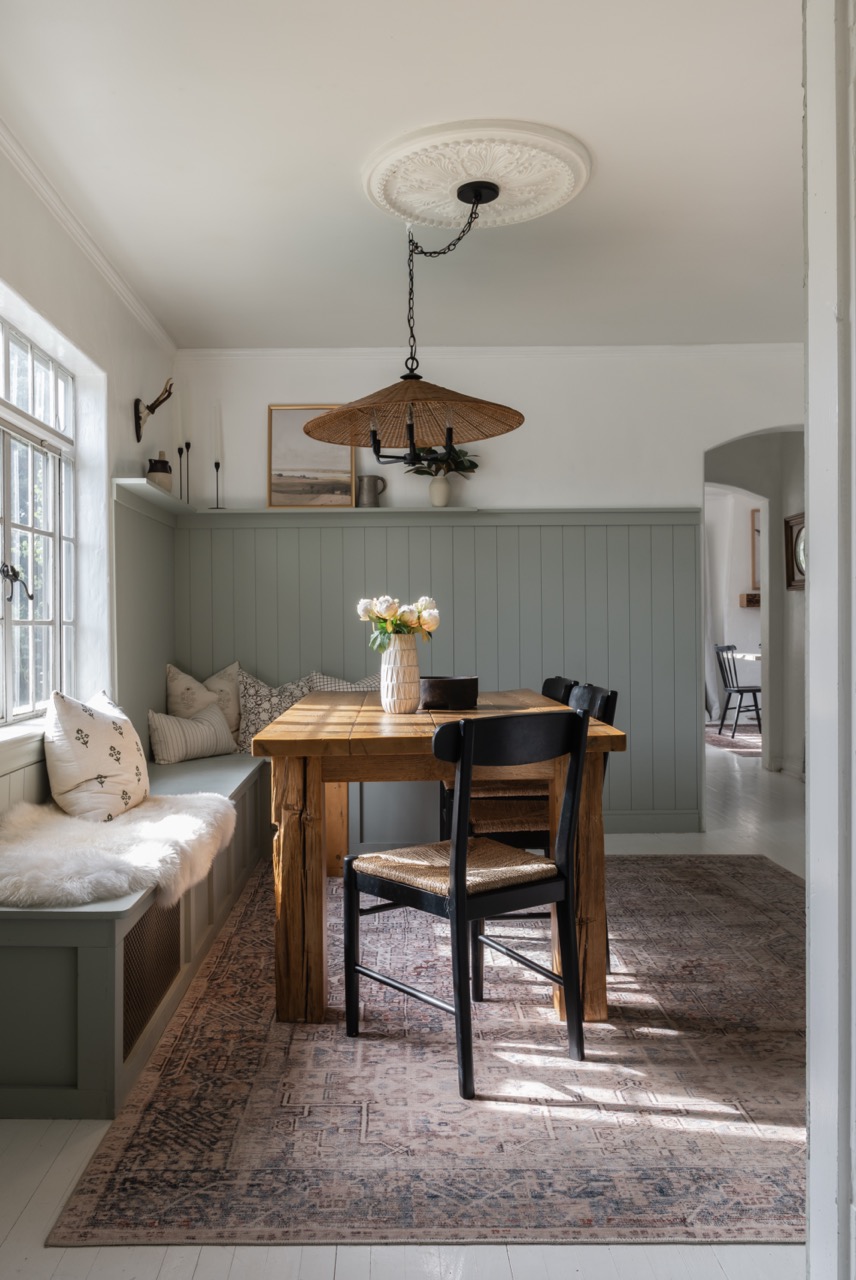
In the entry, new millwork painted in Oval Room Blue creates a tailored first impression, while a built-in bench and hooks provide the practical necessity every Colorado home requires — a place for coats, boots, and the layers that come with changing seasons. Nearby, the morning room was enveloped in Pigeon, a soft sage that feels timeless and garden-inspired. A built-in banquette turns the space into an intimate nook for casual dining and slow coffee mornings under a textured wicker chandelier.
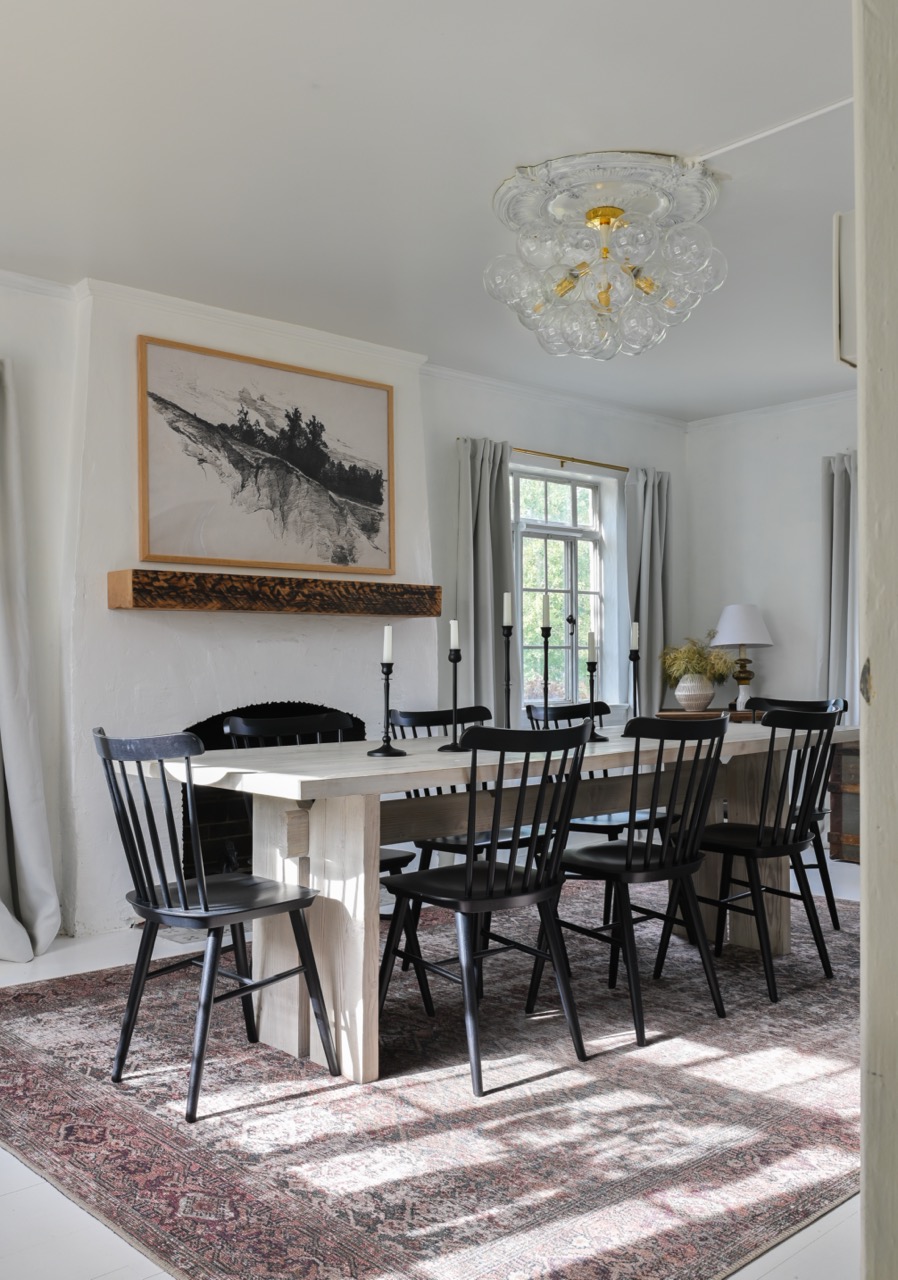
The formal dining room leans into drama: a sculptural glass bubble chandelier floats above, anchored by a stately fireplace that grounds the space in tradition. Upstairs, the bathroom was taken down to the studs and completely reimagined. Marble hexagon mosaic floors bring classic permanence, while crisp Cloe tile brightens the shower. The room is wrapped in Newberg Green — a deep, English-leaning hue that feels slightly preppy, slightly historic, and entirely at home in a 1920s cottage.
A second-story flex space became a playful bunk room, painted Dark Olive and fitted with built-ins that feel both youthful and architectural. And in the kitchen — a full gut renovation — we introduced muted marble checkerboard floors, warm butcher block countertops, Treron cabinets, and brass accents that balance cottage charm with modern functionality.
Nothing feels overly new. Materials were chosen for movement, texture, and the way they will continue to evolve — ensuring the home feels layered, lived-in, and entirely cohesive with its original 1920s soul.

What makes this cottage special isn’t just its finishes, but the way it feels to move through it. The smaller rooms create moments of intention — morning light spilling into the sage dining nook, coats tossed onto the blue entry bench after a walk through City Park, candlelight flickering against plaster walls at dinner. It encourages slower living, quieter conversations, and the kind of daily rituals that feel increasingly rare. In a city that continues to modernize around it, this home remains deeply personal — proof that charm, when preserved thoughtfully, never goes out of style.

We renovate one property at a time — preserving what matters, refining what doesn’t, and designing for how mountain homes are actually lived.
— Deco Vaquero
Every piece was chosen with intention — layered textures, aged brass, dark paint, and European elegance. Explore the full edit below.
View the Collection →